
About Us
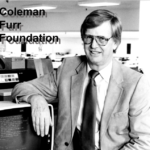
The Coleman Foundation was incorporated by the founder, Dr. Coleman Furr, to support other non-profit organizations that focus on providing education to the community. The Foundation has provided grants to several organizations nationally, that directly affect the lives of thousands of students through their programs that are practical, financially sustainable, and results oriented.
Dr. Furr – Founder and Educational Pioneer
Dr. Furr’s career reflects a lifelong commitment to innovation, leadership, and education in the emerging field of computer technology. His work helped shape the development of computer training and professional certification during the early decades of the information age.
Dr. Furr began his academic journey at the University of Nebraska, where he earned a Bachelor’s Degree in Business Administration in 1953. He later continued his studies at United States International University, earning a Doctor of Education degree. His academic preparation, combined with real-world technical experience, would ultimately guide his vision for creating new opportunities in technology education.
Before beginning his professional career, Dr. Furr served his country during World War II. Stationed in China for two years, he worked as a Motorcycle Military Policeman guiding military convoys along the mountainous routes of the historic Burma Road. The experience demanded discipline, precision, and leadership—qualities that would continue to define his career.
Following the war, Dr. Furr entered the rapidly evolving field of information technology. In 1946, he attended the IBM Training School, where he learned to program IBM Unit Record equipment—one of the earliest forms of automated data processing. This training positioned him at the forefront of a technological transformation that would soon reshape modern business.
Dr. Furr later joined S&W Fine Foods in San Francisco, where he served as Director of Operations. During his time there, the company transitioned from Unit Record equipment to one of the early IBM computer systems. Through this experience, he gained firsthand knowledge of how computer technology could transform business operations.
His expertise led him to Puerto Rico, where he spent two years working under contract with Fomento, a government agency responsible for modernizing the island’s economy and attracting businesses from the United States. Dr. Furr’s role was to improve Puerto Rico’s food distribution system through the strategic use of computer technology, demonstrating the practical value of computing in large-scale logistics.
Dr. Furr later joined FedMart, an innovative membership retail organization widely regarded as the forerunner of Costco. Serving as Controller, he oversaw the installation of the company’s first computer system. During this period, he encountered a significant challenge facing the rapidly growing computer industry: a shortage of properly trained professionals. Experienced personnel often relied on outdated methods, while graduates from early computer schools frequently lacked practical skills.
Recognizing this gap between education and industry needs, Dr. Furr made a decision that would define the next chapter of his career. In 1963, he founded Coleman College with a clear mission—to provide students with practical, career-focused training in computer technology.
The college began with specialized technical programs focused on Unit Record systems and computers. As the demand for technology professionals grew, Coleman College expanded its academic offerings. Associate degree programs were introduced in 1969, followed by bachelor’s degrees in 1973. In 1982, the institution launched a master’s program, continuing its commitment to preparing students for leadership roles in the technology sector. The college later converted into Coleman University.
Under Dr. Furr’s leadership, Coleman College became one of the early institutions dedicated entirely to computer education. The college was also the second computer-focused institution to receive accreditation from the Association of Independent Colleges and Schools (AICS). Dr. Furr later served as Chairman of the AICS Accrediting Commission in 1977 and as Chairman of the AICS Board of Directors from 1989 to 1990, contributing to the advancement of quality standards in higher education.
Dr. Furr’s influence extended beyond the college itself. In 1973, the Institute for Certification of Computer Professionals (ICCP) was established by nine professional organizations to create standards for the growing computing profession. Coleman College’s alumni organization, the Association for Information Management (AIM), became one of the most influential groups within the institute. Dr. Furr chaired the committee responsible for developing the certification examinations used to credential computer professionals nationwide. When the original testing provider increased its fees, ICCP selected Coleman College to manage the certification process.
Through his leadership, Dr. Furr helped shape both technology education and professional certification during a critical period in the development of the computing industry. His vision for practical, career-oriented education created opportunities for generations of students and established a lasting legacy in the field of information technology. More than fifty thousand graduates completed education at Coleman College, and then Coleman University, contributing to the demands in the Information Technology Industry.